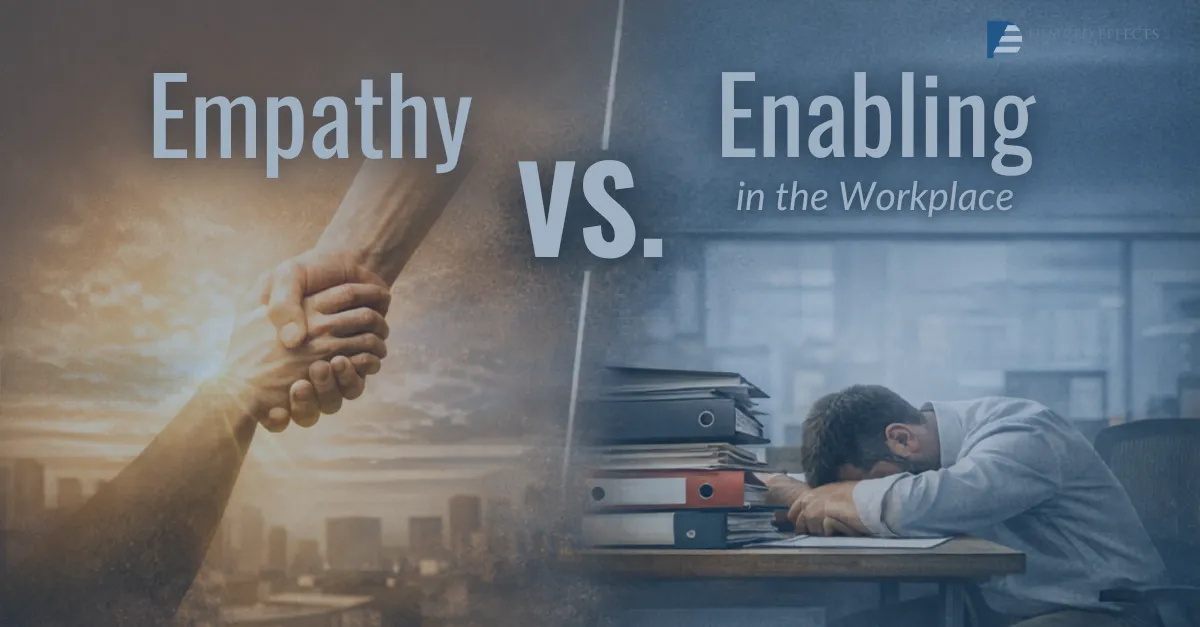
Where’s the Line Between Empathy and Enabling?
Empathy in leadership means validating emotions without taking on responsibility for someone else’s problems. Enabling happens when you carry the emotional labor or shield someone from consequences. The line is crossed when support removes accountability instead of helping team members build capacity.
How Leaders Can Support Without Carrying What Isn’t Theirs
As leaders, many of us are asking the same question right now:
How do I show genuine empathy without accidentally enabling burnout, avoidance, or disengagement?
If you’ve made space for your team to vent, listened deeply, validated emotions, and still find yourself stuck in the same conversations week after week - you’re not alone. This challenge sits at the heart of modern leadership, especially in seasons marked by change, uncertainty, and fatigue.
In this article, we explore one of the most common (and uncomfortable) leadership dilemmas today: finding the line between empathy and enabling - and why crossing it often happens with the best intentions.
Let’s break it down.
Why This Struggle Is So Common for Leaders
Teams across industries are dealing with constant change - shifting priorities, tighter deadlines, and a level of burnout that extends far beyond any single department. In response, many leaders have intentionally become more human in how they show up.
They:
Check in more often
Listen longer
Create safe spaces for venting
Encourage openness and trust
And at first? It works. Trust increases. Energy improves. People feel seen.
Then something starts to feel off.
Certain team members repeatedly bring the same frustrations, the same emotional cycle, and the same lack of follow‑through - despite thoughtful conversations, brainstorming sessions, and clear plans.
Over time, leaders begin to feel:
Emotionally drained
Responsible for regulating others’ emotions
Frustrated by the lack of change
Torn between compassion and accountability
And worst of all, afraid that setting firmer boundaries will make them seem uncaring.
This is where empathy quietly starts to turn into enabling.
Empathy Isn’t the Same as Agreement - or Fixing
One of the biggest misunderstandings about empathy is that it requires you to fix what someone is feeling, agree with their perspective, or soften expectations.
It doesn’t.
True empathy simply acknowledges the emotion - not the behavior, the story, or the avoidance pattern attached to it.
You can validate someone’s experience without:
Excusing poor performance
Lowering expectations
Absorbing their stress
Shielding them from growth
The line gets crossed when empathy begins to protect someone from natural consequences - or robs them of the chance to build capacity.
That’s not leadership. That’s unsustainable caretaking.
The Cost of Enabling (to You and Your Team)
When leaders consistently carry emotional labor that isn’t theirs, a few things happen:
Growth stalls for the individual
Accountability erodes
Resentment quietly builds
The leader becomes emotionally exhausted
The team learns that emotions can replace ownership
Enabling doesn’t just hurt the leader - it keeps employees stuck in the very patterns they’re frustrated by.
Empathy that removes responsibility might feel kind in the moment; however, it isn’t helpful long‑term.
Support Without Ownership: A Critical Leadership Shift
One of the most powerful distinctions we teach leaders is this:
“I can support you through this, however, I can’t carry it for you.”
When enabling shows up, leaders unintentionally take on:
Emotional regulation
Problem‑solving
Responsibility for outcomes
Those pieces belong to the other person.
Support means helping someone take ownership - not replacing it.
The moment you stop doing the emotional work for someone and instead support them in doing it themselves, leadership becomes lighter and more effective.
The Question Every Leader Needs to Ask
In moments where things feel murky, we offer one simple, powerful question every leader can keep nearby:
“Am I helping them build capacity - or am I avoiding discomfort?”
And here’s the key insight most people miss:
Often, the discomfort isn’t theirs.
It’s ours.
When someone is upset, frustrated, or emotional, our instinct is to:
Fix it
Smooth it over
Make it go away
Not because it’s best for them, rather because we want relief from the tension.
Short‑term relief feels good. Long‑term growth requires staying present - even when it’s uncomfortable.
Empathy That Builds, Not Enables
Healthy leadership empathy:
Acknowledges feelings
Maintains expectations
Encourages ownership
Respects adult capability
Builds long‑term resilience
If you’re finding yourself drained, resentful, or stuck in repeat conversations, it’s not a sign you care too much.
It’s a signal that a boundary - not less empathy - is needed.
Final Thought
The goal of empathetic leadership isn’t to eliminate discomfort.
It’s to help people grow through it.
When empathy builds capacity instead of avoiding tension, leaders reclaim energy, teams develop resilience, and trust deepens - sustainably.
And that’s where real leadership lives.
FAQs About Empathy and Enabling at Work
❓ What is the difference between empathy and enabling at work?
Empathy acknowledges how someone feels without removing their responsibility. Enabling happens when a leader absorbs emotional labor or shields someone from accountability, which prevents growth.
❓ Can you validate emotions without fixing the problem?
Yes. Leaders can validate emotions while still maintaining expectations. Empathy does not require agreement, fixing, or lowering standards.
❓ Why do leaders feel emotionally exhausted even when they care?
Emotional exhaustion often comes from carrying problems, regulating emotions, or solving issues that belong to others - a common result of enabling.
❓ How can leaders stop enabling without becoming cold or dismissive?
By supporting people through challenges instead of taking ownership for them. Boundaries paired with empathy build trust and resilience.